

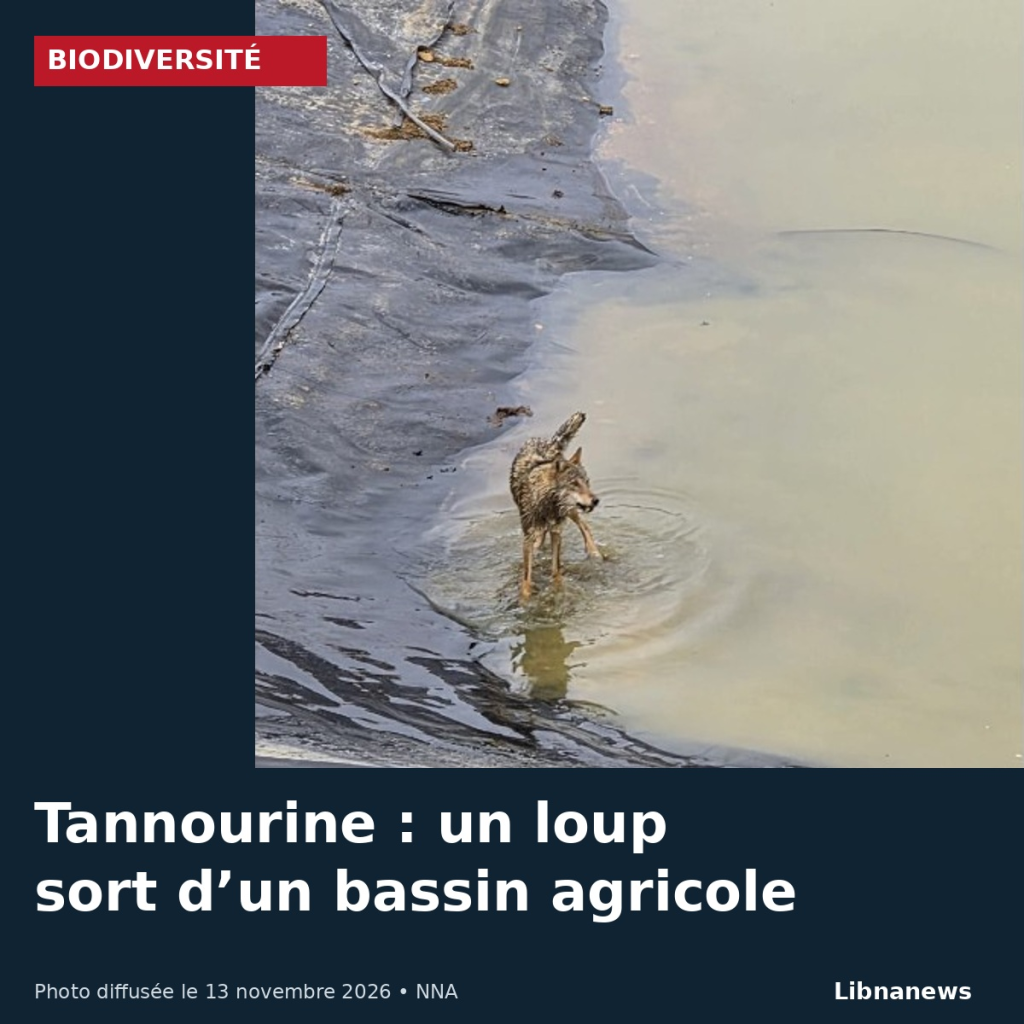
ذئب رمادي، عالق في حوض زراعي في عين البيضة في منطقة تانورين، تمكن من الخروج. The episode was reported Friday 13 November 2026 by a Lebanese news agency. وكان السكان المحليون قد رصدوا الحيوان.
وفقاً لهذا الحساب، استخدم المعاطف البلاستيكية على حافة الحوض ليتسلق. لقد أمسكه بأسنانه ثم تم خدمته للفوز بالمخرج. The photographs disseminated with the information show the animal in contact with the water and the tarpaulin that covers the agricultural holding.
ذئب رمادي شوهد في تانور
وزار أفراد من قوات الأمن والشرطة البلدية والناشطين البيئيين المنطقة خلال الليل. وكان الغرض من وجودهم هو ضمان أن يكون الحيوان قادرا على مغادرة الحوض. ومن ثم، يصف الحساب المتاح ناتجا حصل عليه الذئب نفسه، وليس استخراجا يقوم به فريق إنقاذ.
The exact time of his fall and the length of time spent in the hold are not specified. ولا يُذكر أي فحص بيطري. وقد أُبلغ عن خروج الحوض، ولكنه لا يؤدي وحده إلى استنتاج أنه لا توجد إصابة.
وجود موثق بالفعل في المنطقة
الذئب ليس حيواناً أجنبياً لجبال تانورين. In a fact sheet published in February 2013, the Society for the Protection of Nature in Lebanon already mentioned its presence among mammals in the cedar reserve. The document described a forest mixing cedar, brush, rocky canyon and streams.
هذه العلامة القديمة تجلب سياقاً محلياً، وليس العد الحالي. It does not make it possible to estimate the numbers in 2026 or to establish that the animal of Ain al-Beida came from the reserve. The incident occurred in an agricultural basin; no location within the protected area was announced.
ولا تزال ظروف دخول الذئب إلى الحيازة مجهولة. The available report also does not specify where it went after it was released.





التعليقات